Things to Do in Central Park and the Museums
The city's great park, flanked by some of the world's great museums.
See top-rated activities »About Central Park
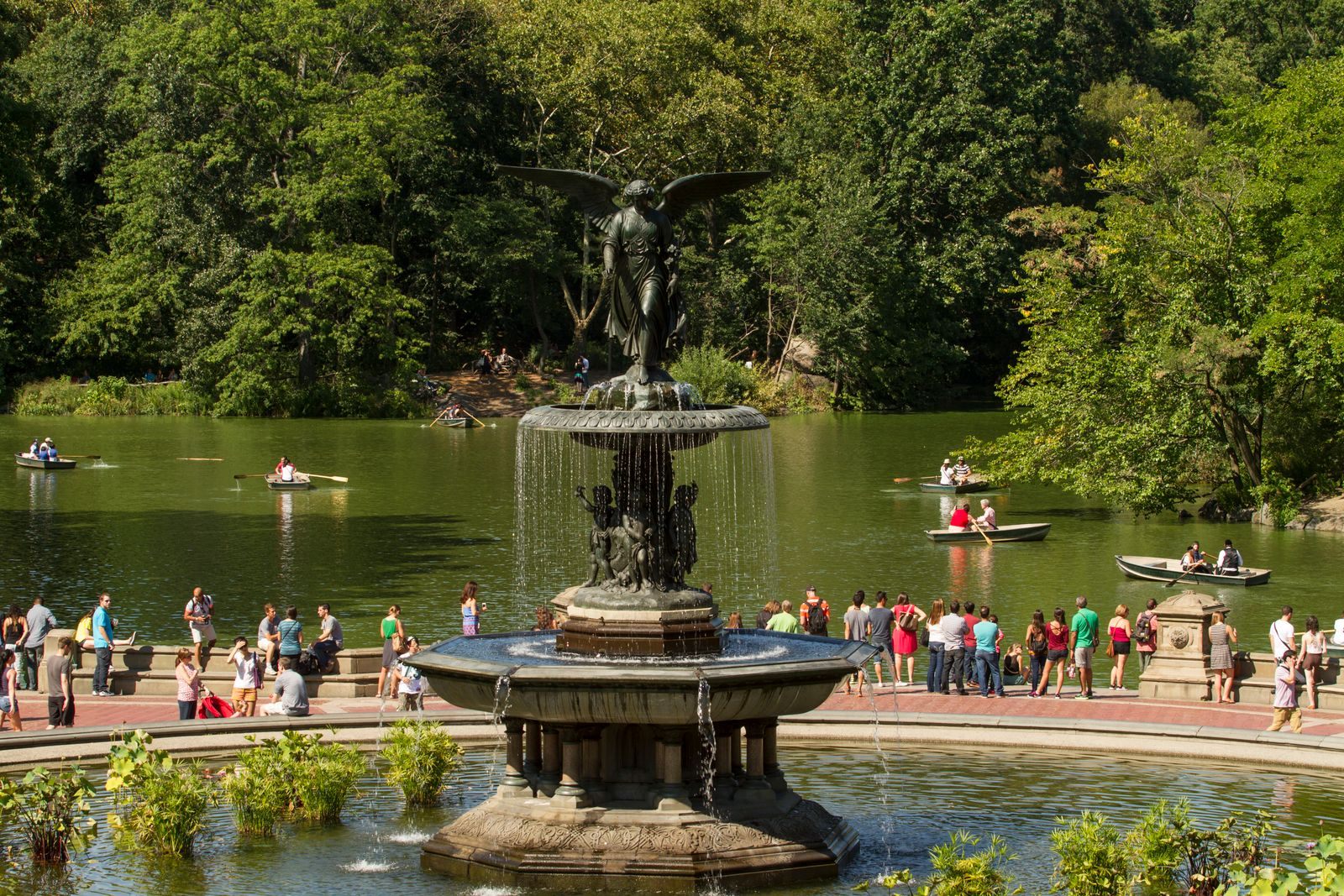
Central Park was designed by Frederick Law Olmsted and Calvert Vaux in the 1850s and covers 843 acres between 59th and 110th Streets. Nearly every part of it is man-made, from the lakes to the rock outcrops left in place between them. Good first stops are Bethesda Terrace and its fountain above the lake, the Mall with its elm trees, Strawberry Fields near the West 72nd Street entrance, Belvedere Castle and the Great Lawn. Rowboats rent at the Loeb Boathouse in warm months, and Wollman Rink opens for ice skating in winter.
The east side of the park is lined with museums along Fifth Avenue, a stretch known as Museum Mile. The Metropolitan Museum of Art, at 82nd Street, is the largest art museum in the country, with an Egyptian temple, European paintings, arms and armor and a seasonal roof garden; a single visit only scratches the surface. A few blocks north, the Solomon R. Guggenheim Museum is housed in Frank Lloyd Wright's spiral building of 1959. The Frick Collection, in an industrialist's mansion at 70th Street, reopened in 2025 after a long renovation, and the Neue Galerie shows Austrian and German art, including Klimt.
Across the park on Central Park West, the American Museum of Natural History is known for its dinosaur halls, the life-size blue whale in the Hall of Ocean Life and the Rose Center planetarium. Its Gilder Center, opened in 2023, added an insectarium and a butterfly vivarium in a cave-like atrium. The Upper West Side around it is a pleasant neighborhood of brownstones, bagel shops and Riverside Park along the Hudson.
North of the park, Harlem was the center of the Harlem Renaissance in the 1920s and remains a cultural capital of Black America. The Apollo Theater on 125th Street, where Ella Fitzgerald and many others got their start, still holds its Amateur Night. Many visitors join a Sunday gospel service or a guided walk through Strivers' Row and Sugar Hill, then stay for soul food. Farther uptown in Morningside Heights, the Cathedral of St. John the Divine is one of the largest churches in the world.
Don’t Miss
Bethesda Terrace, the Mall, Strawberry Fields, boating on the lake and skating in winter.
Five thousand years of art, from the Temple of Dendur to European masters.
Dinosaurs, the blue whale, the planetarium and the newer Gilder Center.
Modern art shown along the ramp of Frank Lloyd Wright's spiral building.
Old master paintings and furniture in Henry Clay Frick's mansion, reopened in 2025.
The landmark Harlem stage of Amateur Night, concerts and guided tours.
Top-Rated Tours, Tickets & Activities in Central Park
 Viator
 Viator
 Viator
 Viator
 Viator
 Viator
 Viator
 Viator
 Viator
 Viator
 Viator
 Viator
 Viator
 Viator
Tours, tickets, prices and reviews from Viator (a Tripadvisor company) and Tiqets — prices are per person, from, and were checked October 28, 2026. See & Do NY may earn a commission when you book, at no extra cost to you.
Plan your time in Central Park
Tell us when you are coming and what you enjoy. A travel specialist will put together hotel, activity and travel options for you — free, with no obligation.
Get free trip quotes »Central Park — FAQ
How do I see Central Park?
On foot, by rented bike or on a guided pedicab or bike tour. A good first walk runs from Columbus Circle or Grand Army Plaza up the Mall to Bethesda Terrace, then west to Strawberry Fields.
How long does the Met take?
Plan at least three hours and pick a few galleries in advance. Timed tickets are sold online, and your ticket also covers the Met Cloisters in Fort Tryon Park on the same day.
Can I visit a Harlem gospel service?
Many Harlem churches welcome visitors on Sunday mornings. Dress respectfully, arrive early, stay for the whole service and follow the ushers' directions; some congregations ask groups to come with a tour.
More of New York City